
The construction industry is facing an unprecedented workforce crisis that's far more severe than most realise. While the title suggests 35,000 vacancies, the reality is staggering: the sector needs approximately 439,000 additional workers in 2025 to meet demand. This represents one of the largest workforce gaps in recent history, with roughly 80-90% of contractors struggling to hire qualified workers for open positions.
This crisis creates an extraordinary opportunity for job seekers. With electricians earning £45,000-£75,000, construction managers commanding £65,000-£95,000, and specialised roles reaching even higher, the financial incentive has never been stronger. The key is positioning yourself with the right combination of skills that employers desperately need.
If you're considering entering construction or advancing your career, these seven skills will make you highly competitive in today's market.
1. Digital Construction and BIM Proficiency
Building Information Modeling (BIM) has transformed from a design office tool into an essential field skill. Today's construction professionals walk sites with tablets, detecting clashes in real-time using software like Revit, Navisworks, and ArchiCAD.
The ability to interpret 3D and 4D models and translate them into executable field tasks has become the highest-demand software skill in construction. Familiarity with digital blueprints, IFC standards, and construction management platforms like Procore, Buildertrend, or PlanGrid is now standard rather than optional.

Workers who can bridge the gap between digital models and physical construction command premium salaries. Consider investing time in learning BIM fundamentals – even basic proficiency can set you apart from other candidates and open doors to supervisory roles.
2. Safety Certifications and Compliance Expertise
Safety isn't just a priority – it's the foundation of every successful construction project. CSCS cards, SMSTS, and IOSH certifications are no longer just preferred; they're often mandatory requirements.
Advanced certifications in working at height, confined spaces, and hazardous materials handling immediately differentiate candidates. Companies particularly value workers who can maintain rigorous safety protocols while keeping projects on schedule. A clean safety record and incident-free work history have become as important as technical skills.
For those targeting public sector or educational projects, deep understanding of CDM regulations and health and safety compliance is especially valuable. These projects often offer stable, long-term employment with excellent benefits.
3. Sustainability and Green Building Knowledge
The push toward net-zero construction has made sustainability expertise highly valuable. Familiarity with BREEAM assessments, energy-efficient design principles, and eco-friendly materials offers a clear competitive advantage.
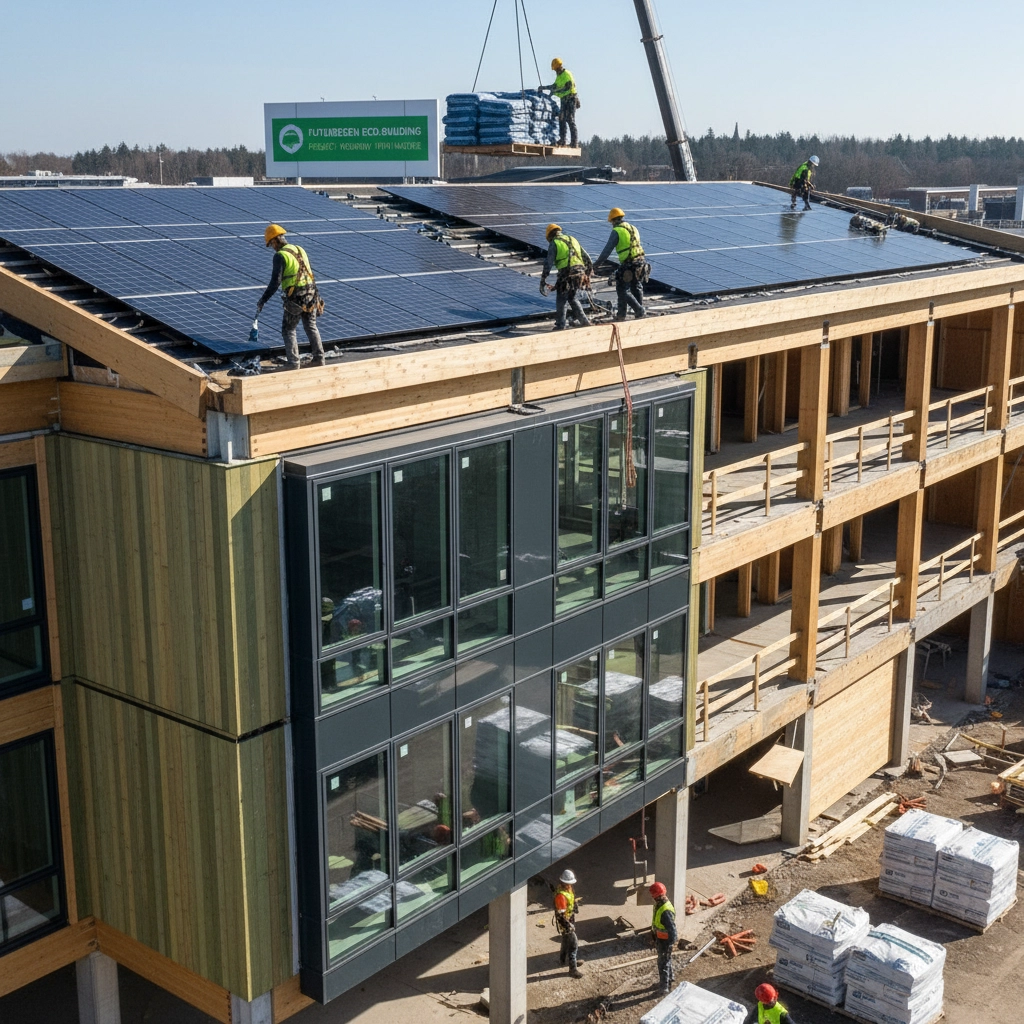
Renewable energy installation has become one of the fastest-growing construction sectors. Solar panel installers can earn £25,000-£40,000, while experienced renewable energy specialists command £45,000-£65,000. Heat pump installation specialists are similarly in high demand as the government pushes toward greener heating solutions.
Understanding sustainable construction practices opens doors to higher-paying projects across multiple sectors. From retrofitting existing buildings to constructing new eco-friendly developments, green skills are increasingly essential.
4. Advanced Technology and Equipment Operation
Construction technology proficiency is now a standard expectation. Employers want workers familiar with drones, project management platforms, GPS-guided machinery, and automation tools.
Heavy equipment operators who can work with GPS-guided machinery and integrate drone technology into their workflows command premium pay between £35,000-£55,000. The ability to use IoT sensors, RFID tracking, and drone photogrammetry helps reduce project rework by 20% or more.

Mobile construction apps for time tracking, quality control, and progress reporting have become daily tools. Workers who embrace these technologies rather than resist them position themselves for advancement opportunities and higher compensation.
5. Project Leadership and Communication Skills
The ability to lead diverse teams, coordinate across trades, and maintain clear communication with clients has become essential for career progression. Modern construction projects involve complex coordination between multiple specialists, subcontractors, and stakeholders.
Strong project leadership includes managing relationships with subcontractors, addressing conflicts quickly, and translating technical requirements into actionable plans. Communication skills are now valued as much as technical expertise, particularly for roles involving client interaction or team supervision.
Those who can foster collaboration while maintaining project momentum often find themselves fast-tracked into management positions. Consider exploring our career progression guide to understand how leadership skills translate into advancement opportunities.
6. Data Analysis and Financial Awareness
Modern construction generates massive amounts of data from scheduling systems, cost tracking, quality control, and progress monitoring. Workers who can convert this raw data into actionable insights using tools like Excel, Power BI, or construction-specific analytics platforms significantly enhance their value.
Financial skills including budget awareness, cost forecasting, and value engineering solutions are critical as material prices and supply chain costs continue fluctuating. Understanding project economics helps workers make decisions that impact profitability and timeline adherence.
Site managers and supervisors with strong financial acumen often progress quickly into commercial or project management roles, where salaries can exceed £75,000 annually.
7. Adaptability and Continuous Learning
The construction landscape evolves rapidly with new materials, methods, regulations, and technologies. Workers who demonstrate adaptability and commitment to continuous learning position themselves for long-term success.
This includes staying current with emerging construction methods, pursuing additional certifications, and being willing to cross-train in multiple specialties. The industry's structural challenges – including an aging workforce and insufficient training pipelines – mean those who continuously upgrade their skills will have sustained career opportunities.
Consider developing skills across multiple trades or specialities. Multi-skilled workers are particularly valuable on smaller projects or in maintenance roles, often commanding higher hourly rates due to their versatility.
The Opportunity Landscape
The construction labour shortage is expected to intensify further in 2026, when the industry will need nearly 500,000 new workers as economic conditions improve and construction activity increases. This gives job seekers unprecedented leverage to negotiate better compensation and choose positions that align with their career goals.
Different sectors offer varying opportunities. Infrastructure projects provide stable, long-term employment. Residential construction offers variety and local opportunities. Commercial and industrial projects often provide the highest compensation but may require more specialised skills.
For those ready to take the next step, the current market conditions create unique advantages for motivated job seekers. Companies are willing to invest in training, offer competitive packages, and provide clear advancement pathways to secure quality workers.
Making Your Move
The construction jobs crisis represents a career opportunity that won't last forever. As training programmes expand and more workers enter the field, competition will eventually increase. Those who position themselves with the right skills now can establish strong career foundations and command premium compensation.
Whether you're entering construction for the first time or looking to advance your existing career, focus on developing a combination of technical skills, safety knowledge, and soft skills. The workers who thrive in today's market aren't just technically competent – they're adaptable, safety-conscious, and ready to embrace new technologies and methods.
Explore current opportunities and consider which of these seven skills align with your interests and career goals. With the right preparation and mindset, you can turn the construction industry's workforce crisis into your career advantage.
